What ‘Lift Capacity’ Really Means: Boat Lift Capacity Sizing for Today’s Boat and Tomorrow’s Upgrade
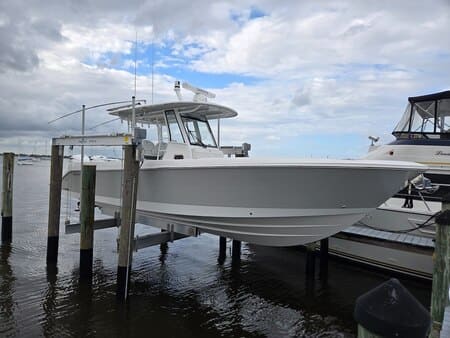
If you boat on the Treasure Coast, you already know the water calls almost every weekend. Getting lift capacity right protects your hull, your dock, and your peace of mind. In this guide, we’ll break down how capacity is calculated, when to build in extra strength, and how Lands End Marine Construction helps homeowners choose the right system. If you’re planning new or replacement equipment, our boat lift installation team can size and install a lift built for today and ready for tomorrow.
Boat Lift Capacity Sizing: Why It Matters
Capacity is more than a number on a spec sheet. A lift that’s undersized strains motors, cables, and cradles. It also transfers unnecessary loads to your dock and pilings. A properly sized system lifts smoothly, runs cooler, lasts longer, and leaves room for upgrades.
Here on the St. Lucie River and Indian River Lagoon, tide swings, wakes, and seasonal storms add dynamic forces. That means the “right size” should consider real-world weight and local conditions, not just the brochure weight of your boat.
Start With Real-World Weight, Not Just Brochure Numbers
Manufacturers often publish a dry weight that does not include many of the things you actually keep on board. To size a lift, think about everything the lift must support when you raise the boat.
- Boat’s published dry weight, plus engine weight if it is not included
- Fuel and water in the tanks, plus any livewell water at pickup
- Gear you leave on board: tackle, coolers, batteries, anchors, tools, covers, and safety gear
- Added equipment: hardtop or tower, second station, T-top electronics, trolling motor, power poles, swim platforms
- Seasonal extras: dive tanks, beach gear, or a portable generator
Even modest items add up fast. A “3,800-pound” skiff can sit hundreds of pounds heavier after fuel, coolers, and gear. A center console with a hardtop and twin outboards adds even more. The safest path is to list your typical load, round up, and then add a buffer.
Build In a Smart Safety Margin for Tomorrow’s Boat
You may not plan to upgrade, but many homeowners do within a few seasons. That’s why capacity should include a forward-looking margin. If you’re debating between two sizes, choosing the one with more headroom often prevents a costly rip-and-replace later.
Think about near-future changes:
- Engine swaps or repowers that add weight
- Electronics, tower, or hardtop additions
- Switching from inshore to offshore setups with more fuel and gear
- Moving from single to twin outboards
A practical rule is to size for your heaviest realistic load, then build in additional cushion. That cushion helps with longevity, reduces strain on motors and cables, and keeps options open if a dream boat shows up next year.
Match the Lift Type and Dock Structure to the Load
Capacity is only part of the story. The lift style and the structure it connects to must also be designed for the load. Cradle lifts, elevator lifts, and platform lifts distribute weight differently. Hull shape and beam width affect bunk contact and cradle spacing. The heavier the boat, the more important it is to match lift type and support.
Equally important is what sits under the lift. Strong pilings and hardware are the backbone of a reliable system. If your dock is older or was built for a smaller boat, a structural check is smart before you install larger equipment. Our team can coordinate required upgrades, including precision piling installation and dock improvements that align with the capacity you choose. When dock framing or decking also needs attention, we can help with expert dock building and repair so the entire system works as one.
How to Add Up Your “Real” Capacity Needs
Here is a simple way to think through the numbers without getting stuck in the weeds:
Step 1: Start with published boat weight. Confirm whether engines are included. If not, add the engine or engines using the manufacturer’s weight.
Step 2: Add your typical fluids. Even partial fuel and water can add significant weight. Round up.
Step 3: Add fixed gear and accessories that live on the boat. Be honest about what stays aboard all season.
Step 4: Add a reasonable growth margin for the equipment you plan to add during the next year or two.
Step 5: Choose a lift capacity that comfortably covers that total and provides a buffer so motors, cables, and beams do not run at their limit day after day.
Not sure what your real number is? Our team will do the math with you, right at the dock. For a deeper look at why a professional assessment matters, this article explains what’s involved in a safe setup: why you should hire a pro for boat lift installation in Stuart.
Common Mistakes Stuart Owners Make With Lift Capacity
Counting only dry weight. Dry weight is a starting point, not the final number. It often excludes engines and never includes fuel, water, and gear.
Buying “just enough.” Running at the edge shortens the life of motors, cables, and bearings. It can also make the lift feel sluggish and noisy, especially when recovering in chop.
Overlooking beam and bunk contact. If the bunks are too narrow or the cradle spacing is off, weight concentrates in the wrong places. That can bruise hulls and stress frames even on a high-capacity unit.
Ignoring the dock structure. A lift is only as strong as the framing and pilings it bolts to. If your structure is tired, size the lift and the dock together so everything works safely.
Skipping the future plan. If the next boat is even a little heavier, a too-tight capacity today becomes a headache tomorrow.
Local Factors That Change the Equation
Every waterfront in Martin County is a bit different. Homes tucked into sheltered canals near Palm City see less wave action than exposed berths by Sewall’s Point or Sailfish Point. Berths on the Indian River Lagoon may deal with steady afternoon winds, while slips along the St. Lucie River feel more boat wake during busy weekends. These details influence how much buffer you want and which lift style fits best.
Water depth at low tide, current direction, and the angle you approach the berth also matter. A lift that feels perfect in calm water may feel strained in a cross-breeze when you are loading gear late in the day. Accounting for these local variables is part of our sizing and design process.
What About “Too Big” A Lift?
Choosing a capacity that is far larger than you need can drive up motor size and electrical demand and may require heavier structure than your dock has now. Oversizing slightly for growth and durability makes sense. Oversizing a lot without a plan can add complexity where you do not need it. Our job is to find the sweet spot that fits your boat, your dock, and your goals.
How Lands End Marine Construction Sizes Lifts the Right Way
We start at your property and look at the whole picture: boat, dock, tides, current, wind exposure, and everyday use. We confirm real-world weight, evaluate approach angles, and study your dock structure so the lift and the dock are balanced. When structure upgrades are smart, we coordinate them, then size the motors, beams, cradles, and bunks accordingly.
We also consider details that make ownership easier in Stuart’s climate. Corrosion resistance for brackish water. Cable routing that fights chafe. Bunk contact that supports hulls with stepped or variable deadrise. Controls mounted where you can see the bow and stern during lift. These little choices add up to a system that behaves well for years.
Want a quick primer you can keep? Bookmark this phrase on our site: boat lift capacity sizing. It links to resources you can share with family or neighbors when they ask, “what capacity boat lift should I buy?”
When It Is Time To Replace Or Upgrade
Age, corrosion, noisy gearboxes, or slow lifting are all signs your system is working harder than it should. If you are adding a tower, repowering, or moving to a heavier model, call before the upgrade. We can confirm if your current structure can handle the new load and whether service, parts, or a full replacement makes sense. If you are starting fresh, our boat lift experts will help you choose a capacity and layout that fits your slip and your boating style.
Quick Reality Checks Before You Decide
Do not assume the brochure number covers you. Add fluids, gear, and accessories, then add a cushion for future changes. That is the number to build around.
Consider how you boat. If you often load heavy for reef days off the inlet or bring the family and beach gear to Hutchinson Island, size for that heaviest normal day.
Look at the whole system. Lift, dock framing, and pilings must work together. If one part is weak, we correct it so the rest of the system lasts.
Your Next Step: Get The Right Capacity for Your Boat Lift
If you are ready for a lift that fits your boat and your future, talk to the local team that sizes and installs them every day. Call 561-722-8822 to schedule a site visit with Lands End Marine Construction, or start by browsing our page on boat lift installation. We will measure, plan, and install a system that protects your boat and your waterfront for years to come.
REACH OUT TO LANDS END MARINE CONSTRUCTION IN STUART AND SURROUNDING AREAS FOR YOUR NEXT MARINE PROJECT